
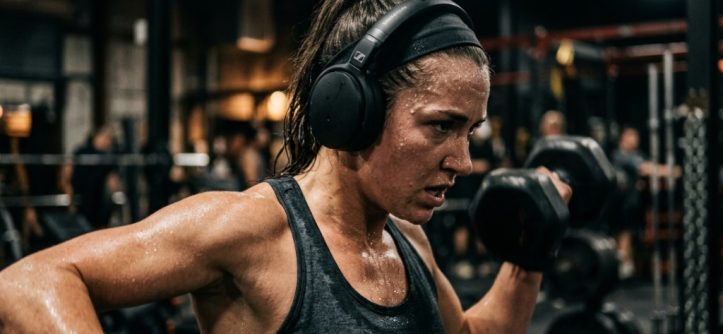
Gym headphones die faster than any other consumer electronics category—the average lifespan of non-sport headphones used daily at the gym is 4–6 months before sweat corrodes the charging contacts, salt crystallizes in the speaker mesh, or the fit fails during one too many burpees and they crack against a concrete floor. The best gym headphones aren’t the ones with the most impressive spec sheet—they’re the ones engineered specifically to survive the combination of salt-laden moisture, repetitive impact, and aggressive movement that destroys consumer-grade wireless gym headphones within a single season of serious training
Best gym headphones combine three non-negotiable qualities that separate them from everyday wireless headphones repurposed for exercise: IPX5+ water resistance (specifically for salt-sweat, not just rain), a secure fit system that survives high-impact movement without user adjustment, and construction materials resistant to the corrosive environment of daily gym use. Without all three, you’re replacing headphones every 4–6 months—spending more annually than one quality sport-specific purchase would cost.
This guide identifies the specific buying mistakes gym-goers make repeatedly and maps the evaluation criteria that lead to headphones lasting 18–24 months of daily training rather than the typical 4–6 month failure cycle.
What Are the Most Common Gym Headphone Buying Mistakes?
The five mistakes that kill gym headphones prematurely: using consumer earbuds without adequate water resistance, choosing based on sound quality rather than fit security, buying over-ear headphones for high-intensity training, ignoring charging contact protection design, and selecting headphones without testing fit during actual exercise movements.
| Mistake | Why People Make It | What Actually Happens | Correct Approach |
|---|---|---|---|
| Using consumer earbuds (AirPods, etc.) at gym | Already own them, seem adequate initially | Sweat corrodes internals within 3–6 months; no warranty covers sweat damage | Buy IPX5+ sport-specific earbuds designed for sweat exposure |
| Prioritizing sound over fit | Audiophile habits carry to gym purchases | Great-sounding earbuds that fall out mid-set destroy focus and risk damage | Fit security first, sound quality second for gym-specific use |
| Over-ear headphones for HIIT/cardio | Comfort from desk use assumed to transfer | Heavy, hot, bouncing cups during movement; sweat pooling inside cups | Over-ear for lifting only; earbuds for all cardio/HIIT/functional training |
| Ignoring charging port design | Not visible as a feature in marketing | Sweat enters open USB-C ports, corroding internal connections within months | Choose recessed ports, magnetic charging, or capped port designs |
| Not testing during actual exercise | Store/home testing feels secure enough | Head-shaking, jumping, and sweating reveal fit failures impossible to predict stationary | Buy from 30-day-return retailers; test during 3 full workouts before committing |
What IP Rating Do You Actually Need for Gym Use?
IPX5 is the minimum for serious gym use — it handles sustained dripping sweat during intense cardio and HIIT sessions. IPX4 (splash only) fails against the sustained sweat exposure of 45+ minute intense training. IPX7 provides the best protection with post-workout rinse capability, extending headphone life by removing corrosive salt residue.
IP ratings decoded for gym context:
- IPX4 (splash resistant): Handles light perspiration during moderate lifting. Fails during heavy cardio where sweat runs continuously down the face past the ears. Acceptable for: yoga, light weight training, walking. Insufficient for: HIIT, spinning, running, CrossFit.
- IPX5 (low-pressure jet resistant): Handles heavy sustained sweat dripping onto and past the earbuds during intense sessions. The minimum for serious gym training. Survives the sweat flow patterns of 45–60 minute high-intensity sessions.
- IPX6 (high-pressure jet): Handles the heaviest sweating scenarios — hot yoga, summer outdoor training, and heavy cardio where sweat literally pools. Quick rinse under tap after workout is safe.
- IPX7 (submersible): Can be rinsed under running water for 30 minutes post-workout. The ideal gym rating — after sweaty sessions, rinse salt away completely before casing. Prevents the salt crystallization that corrodes contacts over months.
- IP67 (dust + water): Full protection against dust (outdoor gyms, sandy CrossFit boxes, dirt-floor facilities) AND water. The ultimate gym rating for any training environment.
The critical insight: sweat is MORE corrosive than rain because of its salt content. A headphone rated “waterproof for rain” may still fail from gym sweat because the salt creates galvanic corrosion that pure water doesn’t. IPX5+ specifically addresses the sustained moisture exposure pattern that gym environments create.
Which Fit Systems Actually Stay Secure During Intense Exercise?
Ear hooks and wingtip/fin designs provide the most reliable security during intense training. Standard friction-fit earbuds (relying only on ear tip pressure in the canal) fail during exercises involving jumping, inversions, or aggressive head movement. The mechanical anchor — whether hook or wing — creates a secondary retention point independent of ear canal friction.
Fit system ranking for gym security:
- Ear hooks (most secure): Rigid or flexible hook wraps over ear top, creating a gravity-defying mechanical anchor. Survives burpees, box jumps, sprinting, and inversions. Only risks: lying face-down on bench pressing hook against surface. Examples: Powerbeats Pro 2, JBL Endurance Race.
- Wingtip/Fin (very secure): Flexible silicone extension tucks into the concha (upper ear bowl), creating a lock independent of canal seal. Survives most exercises. Slight risk during explosive head turns. Examples: Beats Fit Pro, Jabra Elite 8 Active, Bose QuietComfort Earbuds.
- Deep-canal seal (moderate): Rely on ear tip friction deeper in the canal. Work for steady-state cardio (cycling, elliptical) and weightlifting. Fail during jumping, running with heavy foot strike, or any movement creating repeated vertical G-forces. Examples: AirPods Pro, Sony WF-1000XM5.
- Standard shallow fit (poor for gym): AirPods-style half-in-ear with no seal or anchor. Stay in during walking only. Any gym movement beyond light stretching dislodges them. Not recommended for any training beyond yoga/Pilates.
For comprehensive gym-tested fit assessments with exercise-specific security ratings, the best headphones for working out guide tests each model through specific exercise movements and rates retention.
Should You Use Over-Ear Headphones at the Gym?
Over-ear headphones work for weightlifting and machine work only — where your head stays relatively stable. For any cardio, HIIT, functional training, or jumping exercises, over-ear headphones bounce, trap sweat, overheat your ears, and risk falling off during movement. The form factor is incompatible with high-intensity training physics.
Over-ear at the gym — when it works and when it doesn’t:
- Works for: Strength training (bench, squat, deadlift, machines), stretching, low-intensity cable work, and between-set rest periods. Head position is stable, movement is controlled, and the motivational bass of over-ear drivers enhances lifting intensity.
- Fails for: Treadmill running, cycling (heavy sweat in enclosed cups), HIIT circuits, box jumps, burpees, rowing machine, and any exercise combining speed with directional changes. The weight, bounce, and heat make them counterproductive.
- Sweat concern: Over-ear cups create a sealed environment around your ears during exertion — trapping heat and sweat against your skin. This accelerates both ear discomfort and internal component corrosion. Most over-ear headphones lack gym-appropriate sweat ratings.
The gym-appropriate over-ear exceptions: the Adidas RPT-02 Sol and similar sport-specific over-ear models with washable pads and IPX4+ ratings exist — but they’re the exception, not the rule. Default recommendation: earbuds for gym, over-ear for desk.
What Are the Best Gym Headphones in 2025?
The Jabra Elite 8 Active ($199), Beats Fit Pro ($199), and JBL Endurance Race ($79) lead the gym headphone category through the combination of IP rating, fit security, sound quality, and proven long-term gym durability that other models can’t match across all criteria simultaneously.
- Jabra Elite 8 Active ($199) — Best overall gym headphone: IP68 (highest consumer rating). MIL-STD-810H military durability. Secure fit. ANC + HearThrough. Crushproof, dustproof, fully submersible. 8-hour battery. The nuclear option for gym durability.
- Beats Fit Pro ($199) — Best for Apple ecosystem gym-goers: IPX4 (adequate, not best-in-class). Secure wingtip fit. ANC for post-gym commute. Apple H1 chip integration. Good sound quality. Better ecosystem integration than any competitor for iPhone users.
- JBL Endurance Race ($79) — Best budget gym headphone: IP67 (excellent for the price). Hook design for maximum security. Good bass-forward sound. 30-hour total battery. TwistLock ear hook technology. Best value in the sport headphone category.
- Jaybird Vista 2 ($149) — Best for CrossFit/functional training: IP68 + military standard. Smallest sport earbud available. Crushproof. Extreme impact resistance. Custom EQ. Best for athletes doing varied functional movements where minimal size prevents interference.
- Sony WF-SP800N ($128) — Best ANC sport option under $150: IP55. Good ANC for gym music isolation. Secure arc support design. Extra bass tuning for training motivation. 9-hour battery with ANC. Solid all-around sport performer.
Once you find the right fit, it’s time to sync them up; learn how to pair Sony Bluetooth headphonesquickly so you can jump right into your workout playlist without technical delays.
How Do You Maintain Gym Headphones to Maximize Their Lifespan?
The post-workout 60-second maintenance routine doubles gym headphone lifespan: wipe earbuds dry immediately after each session, clean charging contacts before casing, rinse weekly (if IPX7+), and replace ear tips every 3–4 months when silicone hardens from salt exposure.
Gym headphone maintenance protocol:
- After every workout (60 seconds): Wipe earbuds with dry microfiber cloth, focusing on charging contacts, speaker mesh, and any crevices where sweat pools. Dry BEFORE placing in charging case — wet contacts in case create corrosion at the contact-to-case interface.
- Weekly (2 minutes): Clean speaker mesh with dry soft-bristle brush (old toothbrush). Remove ear tips, wash with mild soap, dry completely. Inspect case charging pins for green oxidation (early corrosion indicator).
- Monthly (5 minutes): Deep clean case interior with dry cotton swab. Check all silicone seals for degradation. Inspect ear tips for hardening/cracking (replace if no longer flexible). Verify charging works smoothly on both ears.
- Every 3–4 months: Replace silicone ear tips entirely ($8–$12). Gym-exposed silicone hardens from salt/sweat chemical exposure, losing its seal and comfort properties faster than tips used only for casual listening.
What Sound Characteristics Matter Most for Gym Motivation?
Bass-forward tuning with punchy sub-bass and energetic upper mids motivates high-intensity training better than neutral or analytical sound signatures. Gym listening isn’t about audio accuracy — it’s about energy delivery that matches training intensity. Flat-tuned headphones sound thin and uninspiring during heavy lifting or sprints.
- Bass emphasis: Punchy, driving bass provides rhythmic anchor for rep timing and cardio cadence. More bass = more perceived energy during exertion. Nearly all sport-tuned headphones boost bass 3–6dB above neutral for this reason.
- Upper mid presence: Vocals and guitar energy in the 2–4kHz range provides the “intensity” and “aggression” that workout playlists depend on. Recessed mids sound distant and demotivating during high-effort training.
- Controlled treble: Harsh treble causes fatigue during extended loud listening. Sport headphones typically soften treble slightly to enable higher-volume listening without ear fatigue during 45–60 minute sessions.
- Volume headroom: Gym environments are loud (70–85dB with music, weights, and chatter). Your headphones need enough volume to overcome ambient gym noise without distortion at high levels. Underpowered drivers that distort above 80% volume frustrate gym users.
How Do You Test Gym Headphones Before Committing?
Buy from a retailer with 30-day returns, then test through three complete workouts covering your typical training variety. Test day 1: highest-intensity session (HIIT, sprints, or heavy cardio). Test day 2: strength training with bench and overhead movements. Test day 3: full routine combining both. If headphones survive all three without dislodging, overheating, or causing discomfort — keep them.
- Workout 1 — High impact test: Include burpees, jumping, direction changes, and 10+ minutes of sustained running. This is where fit security either passes or fails. If they shift during any movement, they’ll annoy you forever. Return immediately.
- Workout 2 — Sweat endurance test: Your heaviest sweating session. Note: any muffling of sound during the session (indicating moisture reaching the driver), any slipping from sweat reducing friction, or any discomfort from sealed humid ear canals.
- Workout 3 — Full routine integration: Combine everything — transitions between exercises, rest periods (do they stay comfortable while resting?), and water breaks (easy to remove/replace quickly?). This tests real-world gym flow, not isolated exercises.
Conclusion
The best gym headphones avoid three fatal flaws: inadequate water resistance (need IPX5+ for real sweat), insecure fit (need hooks or wingtips for movement), and fragile charging contacts (need protected port design for longevity). Sound quality matters less than durability and fit for gym-specific purchases — a secure, sweat-proof earbud with good bass at $80 outperforms a premium audiophile earbud that dies from sweat in 4 months. Buy sport-specific, maintain post-workout, and your gym headphones last 18–24 months instead of the typical 4–6 month consumer-earbud destruction cycle.
Compare gym-tested headphone options with sweat durability and fit security ratings at the best headphones for working out guide featuring exercise-specific testing across training styles.
What type of training do you do most, and what killed your last pair of gym headphones? Share in the comments — your failure story helps others avoid the same model or mistake.
Frequently Asked Questions
Can I use AirPods Pro at the gym?
AirPods Pro (IPX4) handle light gym use — weightlifting and moderate cardio. They lack the sweat resistance and secure fit for intense training. Heavy sweat exposure over months will corrode internals (not covered by warranty). For serious daily gym use, sport-specific earbuds with IPX5+ and secure wing/hook designs last significantly longer.
How long should gym headphones last with daily use?
Sport-specific headphones (IPX5+) with proper post-workout maintenance last 18–24 months of daily training. Without maintenance (not wiping after workouts), expect 10–14 months. Consumer headphones without sport ratings last 3–6 months of daily gym use before sweat damage causes failure. The maintenance routine matters as much as the IP rating.
Are over-ear headphones okay for weightlifting only?
Yes — if you exclusively lift weights without cardio intervals, over-ear headphones provide superior sound immersion and motivational bass. Keep sessions under 60 minutes to manage heat buildup, and choose models with removable washable pads. Remove them for any cardio or compound movements with explosive head motion.
What’s the best budget gym headphone under $50?
The JBL Endurance Race ($49–$79, frequently on sale below $50) offers IP67, hook-secured fit, and bass-forward tuning purpose-built for exercise. At the absolute budget floor, the Anker Soundcore Sport X10 ($35–$45) provides IPX7 and ear hooks at minimal investment. Both outperform any consumer earbud repurposed for gym use at double the price.
Do wireless gym headphones have lag during music?
For music during workouts: no perceptible lag on any modern Bluetooth 5.0+ headphone. Audio latency (40–80ms) is imperceptible for music listening. For gym TV/video screens: slight lip-sync delay may be visible but most gyms play audio through overhead speakers anyway. Lag is only a concern for gaming — irrelevant for gym music use.
Should I buy ANC gym headphones or non-ANC?
ANC is a bonus for gym use (blocks loud gym music, grunting, weight-dropping noise) but shouldn’t be the primary selection criterion over fit security and water resistance. If two headphones have equal fit and IP rating, choose the one with ANC. But never sacrifice IP rating or fit security to gain ANC — durability and security matter more for gym longevity.
How do I stop gym headphones from getting smelly?
Wipe after every workout (removes sweat before bacteria multiply), clean ear tips weekly with mild soap, and allow headphones to air-dry fully before storing in a closed case. Never store sweaty headphones immediately in a sealed case — the warm, moist, sealed environment breeds bacteria rapidly. Leave the case open for 10 minutes after placing damp earbuds inside.




Leave a Reply