
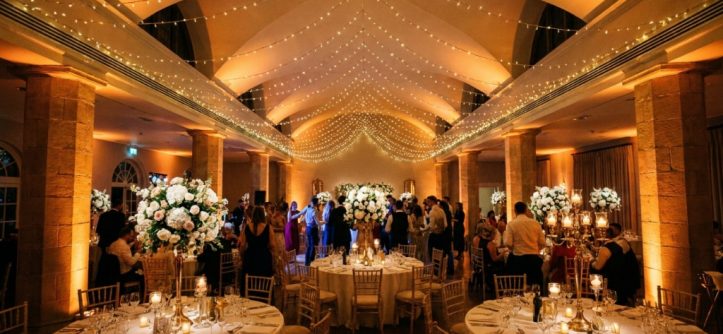
Planning your wedding reception lighting but not sure where to start? The right amount of wedding reception lighting can transform your venue from ordinary to extraordinary, creating a magical atmosphere that wows your guests. But how much lighting do you actually need?
What Are the Different Types of Wedding Reception Lighting?
Wedding reception lighting typically falls into four main categories, each serving a unique purpose:
| Type of Lighting | Purpose | Examples |
|---|---|---|
| Ambient Lighting | Provides overall illumination for the space. | Chandeliers, string lights, lanterns, uplighting |
| Task Lighting | Focuses light on specific areas for functionality. | Spotlights on the dance floor, buffet, or cake table |
| Accent Lighting | Highlights decor or architectural features. | Pin spotting, wall washing, or highlighting centerpieces |
| Decorative Lighting | Adds visual interest and enhances the theme. | Fairy lights, neon signs, candles, or projection lighting |
How Much Ambient Lighting Do I Need?
Ambient lighting sets the foundation for your reception’s atmosphere. Here’s how to determine the right amount:
- Venue Size: Larger venues require more lighting to fill the space adequately. As a general rule, aim for **1–2 light sources per 100 square feet** of space.
- Existing Lighting: If your venue has built-in lighting (e.g., chandeliers, wall sconces), you may need less additional ambient lighting. Test the venue’s lighting at night to see what’s missing.
- Theme and Mood: For a romantic, dimly lit atmosphere, use softer ambient lighting (e.g., string lights, lanterns). For a bright, energetic vibe, opt for brighter sources like uplighting or chandeliers.
- Guest Comfort: Ensure there’s enough light for guests to see their food, navigate the space, and interact comfortably. Avoid overly dim lighting that makes it hard to see.
Pro tip: Use **dimmable lights** to adjust the ambiance throughout the evening. Bright lighting during dinner and softer lighting for dancing creates a dynamic atmosphere.
How Much Task Lighting Is Necessary?
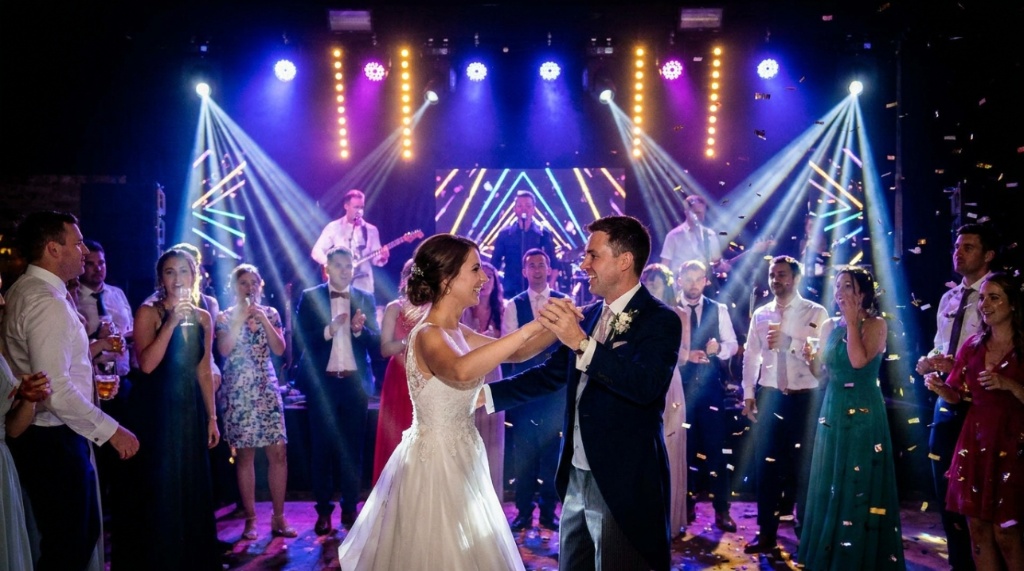
Task lighting ensures that key areas are well-lit for functionality and safety. Here’s how much you need for different spaces:
| Area | Recommended Lighting | Quantity |
|---|---|---|
| Dance Floor | Spotlights, LED panels, or moving lights | 2–4 lights, depending on size |
| Buffet/Cake Table | Pin spotting or small uplights | 1–2 lights per table |
| Bar Area | Pendant lights, LED strips, or backlighting | 1–2 lights |
| Seating Areas | Table lamps, candles, or small string lights | 1 light per 2–3 tables |
How Much Accent Lighting Should I Use?
Accent lighting highlights the best parts of your venue and decor. Here’s how to use it effectively:
- Focus on Focal Points: Use accent lighting to draw attention to key elements like the sweetheart table, cake, or a stunning centerpiece. **1–2 lights per focal point** are usually sufficient.
- Wall Washing: If your venue has interesting textures or architectural features, use wall washing to highlight them. **1–2 lights per wall** can create a dramatic effect.
- Avoid Overdoing It: Too much accent lighting can create a cluttered look. Stick to **3–5 accent lights** for a balanced, elegant appearance.
How Much Decorative Lighting Do I Need?
Decorative lighting adds personality and style to your reception. Here’s how to incorporate it without going overboard:
- String Lights: Hang string lights overhead or along walls for a magical, starry effect. **1–2 strands per 10 feet of space** is a good starting point.
- Candles: Use candles on tables, along aisles, or in lanterns for a romantic glow. **5–10 candles per table** creates a warm, inviting atmosphere.
- Neon Signs: A custom neon sign (e.g., your names, wedding date, or a fun phrase) adds a modern, Instagram-worthy touch. **1–2 signs** are usually enough.
- Projection Lighting: Project patterns, monograms, or images onto walls or floors for a unique effect. **1 projector** is typically sufficient for most venues.
People also ask: Can I use too much decorative lighting?
Yes! Too many decorative lights can create visual clutter and distract from the main elements of your reception. Stick to a few key pieces that enhance your theme.
Determining your design scale depends heavily on venue size and cultural traditions. For couples organizing vibrant, multi-day celebrations with expansive guest lists, specific decor adjustments are essential. Reviewing practical Tips for an Indian Wedding helps balance grand color palettes with proper fixture placement.
How Do I Calculate the Total Lighting Needed for My Reception?
To calculate the total lighting needed, consider the size of your venue, the types of lighting you want, and the atmosphere you’re aiming for. Here’s a simple formula:
- Measure Your Space: Determine the square footage of your venue. For example, a 20×30 ft room is 600 sq ft.
- Ambient Lighting: Aim for **1–2 light sources per 100 sq ft**. For a 600 sq ft venue, you’d need **6–12 ambient lights** (e.g., string lights, chandeliers).
- Task Lighting: Add **2–4 lights for key areas** (e.g., dance floor, buffet, bar).
- Accent Lighting: Include **3–5 lights** to highlight focal points (e.g., sweetheart table, cake).
- Decorative Lighting: Add **1–2 statement pieces** (e.g., neon sign, projection lighting).
Real-world example: For a 1,000 sq ft reception venue, you might need:
- 10–20 ambient lights (e.g., string lights, chandeliers)
- 4–6 task lights (e.g., spotlights for dance floor and buffet)
- 3–5 accent lights (e.g., pin spotting for cake and sweetheart table)
- 1–2 decorative lights (e.g., neon sign, projection lighting)
Ready to light up your reception? Explore wedding ambiance lighting for inspiration and start planning your dream setup.
Frequently Asked Questions
Can I use only string lights for my wedding reception?
It depends on your venue and theme. String lights alone can create a beautiful, romantic atmosphere for smaller or outdoor venues. However, for larger spaces, you may need additional ambient or task lighting to ensure guests can see and move around comfortably.
How do I know if my venue has enough built-in lighting?
Visit the venue at night and test the lighting. Bring a friend or your wedding planner to assess whether the existing lighting is sufficient or if you need to add more. Pay attention to dark corners or areas that need extra illumination.
What’s the best lighting for an outdoor wedding reception?
For outdoor receptions, focus on:
- String lights or fairy lights for ambient lighting.
- Lanterns or candles for a romantic glow.
- Uplighting to highlight trees, walls, or other natural features.
- Spotlights for key areas like the dance floor or buffet.
Do I need a lighting designer for my wedding?
Not necessarily, but it can help. If you’re planning a complex lighting setup (e.g., moving lights, projections, or custom designs), a lighting designer can ensure everything looks cohesive and professional. For simpler setups, you can DIY or work with your venue’s staff.
How do I create a romantic lighting atmosphere on a budget?
Focus on these budget-friendly ideas:
- Use string lights or fairy lights for ambient lighting.
- Incorporate candles or lanterns for a warm glow.
- Rent uplighting or spotlights instead of buying.
- DIY decorative lighting, like mason jar lanterns or paper lanterns.


Leave a Reply