
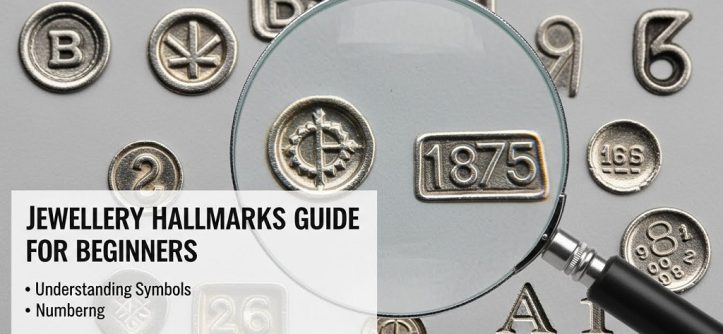
When purchasing or inheriting jewellery, you might notice small initials, numbers, or symbols stamped on the metal. These tiny marks—known as jewellery hallmarks—carry big meaning. They reveal precious details about your jewellery’s authenticity, purity, and origin. For anyone new to collecting or buying fine jewellery, understanding hallmarks helps you make informed decisions and avoid counterfeit or misrepresented pieces.
In this Jewellery Hallmarks Guide for Beginners: Understanding Symbols, Numbers and Assay Marks, we’ll decode what each hallmark means, how to identify them, and where to find them. Whether you own vintage silver, modern gold, or designer platinum pieces, this beginner’s guide to jewellery hallmarks will teach you how to read your jewellery’s “passport.”
How Can Beginners Identify Jewellery Hallmarks on Their Pieces?
Hallmarks are often found in discreet places where they won’t affect the piece’s appearance or structure. For example, look for hallmark stamps on the inner band of rings, clasps of necklaces, or backs of earrings. You might need a magnifying glass or a jeweller’s loupe to read them clearly.
Most jewellery hallmarks include a combination of letters, symbols, and numbers. Here’s what they can indicate:
- Metal purity mark – The number that shows the fineness or karat.
- Assay office mark – Identifies the official testing office that verified the metal.
- Maker’s mark – Usually initials or a logo that represents the jeweller or manufacturer.
- Date letter mark – Indicates the year of hallmarking, common in UK and antique jewellery.
Inspect each mark carefully, as counterfeits might copy purity numbers but lack real assay marks or maker’s signatures.
What Do the Numbers on Jewellery Mean?
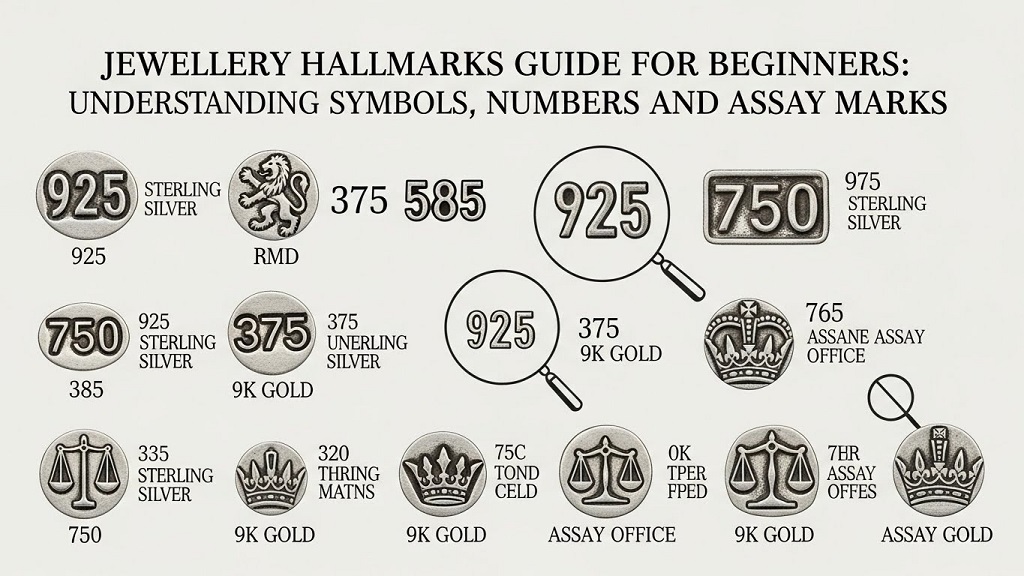
The numbers on jewellery are purity marks. They tell you what proportion of the metal is pure gold, silver, or platinum. Here’s a breakdown of common hallmark numbers and their meanings:
| Metal | Hallmark Number | Purity (Approx.) |
|---|---|---|
| Gold | 375 | 9 Carat (37.5% gold) |
| Gold | 585 | 14 Carat (58.5% gold) |
| Gold | 750 | 18 Carat (75% gold) |
| Gold | 916 | 22 Carat (91.6% gold) |
| Silver | 925 | Sterling Silver (92.5% silver) |
| Silver | 800 | 80% silver |
| Platinum | 950 | 95% platinum |
These numeric hallmarks are universal indicators of metal content, ensuring buyers and traders can compare purity across markets.
What Are Common Jewellery Hallmark Symbols and Their Meanings?
Jewellery hallmark symbols and meanings vary by country, but most rely on recognizable icons. For example:
- Lion Passant (UK Silver): Represents sterling silver purity in British hallmarks.
- Leopard’s Head: Signifies the London Assay Office mark.
- Anchor: Indicates Birmingham Assay Office.
- Scales or Balance: Symbol for international hallmarking and verification.
- Three-Tower Castle: Used for Danish silver marks.
- Crown: Seen on older UK gold items before 1998.
Recognizing these symbols helps confirm your item’s origin and legal hallmarking. In some cases, a piece might carry both an assay symbol and numeric purity stamp for double confirmation.
What Is an Assay Mark and Why Is It Crucial?
An assay mark is an official stamp that certifies the metal content has been tested and approved by a government-regulated office. When a jeweller submits a piece to an assay office, the metal undergoes analysis to verify its claimed purity. Once confirmed, it’s stamped with a hallmark that includes the assay office’s logo or symbol.
Notable assay offices include:
- London, UK – Leopard’s Head
- Birmingham, UK – Anchor
- Sheffield, UK – Yorkshire Rose
- Edinburgh, UK – Castle
- Swiss Hallmark – Helvetia Head
Buying jewellery with an assay mark ensures the piece isn’t fake or under-karated. It offers legal protection and confirms authenticity according to national or international standards.
How Do You Read Jewellery Hallmarks Correctly?
Reading hallmarks might seem tricky at first, but with practice, you can decode them quickly. Follow these steps:
- Find the hallmark area – Often on an inner band, clasp, or underside.
- Identify the metal purity stamp – Numbers like 925, 750, or 950.
- Look for the maker’s mark – Initials or a logo that identifies the brand or craftsman.
- Locate the assay symbol – Check for office marks like the anchor or leopard’s head.
- Check the date letter (if present) – Helps identify when it was tested and marked.
Often, online databases can help cross-reference obscure marks. Websites such as the UK Assay Office register or hallmarking databases can confirm manufacturer details or assay origins.
Are All Jewellery Pieces Required to Have Hallmarks?
Not all jewellery items legally require hallmarks. In some countries, only precious metals above certain weights must be hallmarked. For example, in the UK:
- Gold jewellery over 1 gram must be hallmarked.
- Silver pieces over 7.78 grams require a hallmark.
- Platinum jewellery over 0.5 grams must be hallmarked.
Lightweight or costume jewellery may not have any markings because they don’t contain enough precious metal for testing. In contrast, fine jewellery from reputable brands is typically fully hallmarked to prove authenticity.
What’s the Difference Between a Maker’s Mark and a Brand Logo?
While both look similar, a maker’s mark is an official identifier registered with an assay office, while a brand logo is for marketing purposes. The key difference lies in regulation—maker’s marks serve as a traceable record of who crafted the piece, while brand logos are not part of legal hallmarking systems. Many luxury brands use both, combining tradition with branding.
How Do Hallmarks Help Identify Antique Jewellery?
For collectors and vintage enthusiasts, hallmarks are invaluable clues. They help determine:
- Age of the piece – Through date letters or retired assay marks.
- Place of origin – Based on assay symbols or country codes.
- Craftsman’s identity – Through maker’s initials or unique punches.
By tracing these details, experts can authenticate historical items, estimate their value, and verify provenance. Authentic antique jewellery often appreciates in value due to confirmed hallmark records.
Can You Test Jewellery Without a Hallmark?
Yes, but hallmarking remains the most reliable method. If your item lacks a hallmark, you can request professional metal testing through a jeweller or assay service. There are also acid testing kits for basic purity checks, but they are less precise. For expensive or inherited jewellery, official hallmark verification is always recommended.
How to Maintain the Value of Hallmarked Jewellery?
Hallmarks can wear down over time with polishing or resizing. To preserve them:
- Avoid excessive polishing near hallmark areas.
- Ask jewellers to preserve hallmark marks during repair work.
- Store certificates or assay documentation if provided.
Having visible and legible hallmarks increases resale value and builds buyer confidence.
Conclusion: Why Learning Hallmarks Empowers You as a Buyer
Understanding jewellery hallmarks protects you from fraud, ensures fair pricing, and enhances your knowledge as a collector or buyer. From metal purity numbers to assay office symbols, these small details carry immense significance in establishing authenticity and value.
If you found this Jewellery Hallmarks Guide for Beginners: Understanding Symbols, Numbers and Assay Marks helpful, consider exploring official hallmarking authorities or consulting professional jewellers for appraisals. Knowing what your jewellery’s markings mean prevents costly mistakes and builds your confidence in the world of fine jewellery.
CTA: Discover the hidden story behind your jewellery! Use a magnifying glass today and uncover the hallmarks that define its beauty, history, and value.
FAQ: Jewellery Hallmarking for Beginners
1. What is the purpose of hallmarking jewellery?
Hallmarking certifies the metal’s purity and authenticity. It protects consumers from fraudulent descriptions and ensures the jewellery meets legal standards of fineness.
2. How do I know if my gold is real without a hallmark?
Without a hallmark, you can test purity with acid testing kits or by taking it to a certified jeweller for electronic or XRF testing. However, hallmarking remains the legal standard for proof.
3. Are international hallmarks the same as UK ones?
No. Each country has its own hallmark symbols and assay offices. However, under the Vienna Convention, many nations recognize each other’s hallmarks across borders.
4. Can a hallmark fade or get erased over time?
Yes, heavy polishing or resizing may wear down hallmarks, especially on antique items. Always inform jewellers to avoid polishing over hallmark zones during repairs.
5. What is the difference between 18K gold and 750 hallmark?
They represent the same purity level—75% pure gold. “18K” is a carat mark, while “750” is a numeric hallmark used internationally.
6. Are fake hallmarks common?
Unfortunately yes, especially in counterfeit jewellery markets. Always buy from trusted sellers or check assay records to ensure the mark’s authenticity.
7. Can I request hallmarking for old family jewellery?
Yes. Any unmarked gold, silver, or platinum item can be submitted to an assay office for testing and hallmarking, provided it meets minimum weight requirements.
Related Topics: Why Corded Bosch GWS8-45 Makes Work Efficient and Power-Stable
Related Topics: Diamond Quality Factors Explained: Cut, Color, Clarity, Carat and Certification


Leave a Reply