

Choosing the right wedge can change how you play around the green. Many golfers spend hours picking the perfect driver or iron set, then rush through their wedge decision. However, the wedge is one of the most-used clubs in your bag. Getting it wrong can cost you several strokes per round.
This guide will walk you through the key differences between cavity back and blade wedges. By the end, you will have a clear picture of which style suits your game.
What Are Cavity Back Wedges?
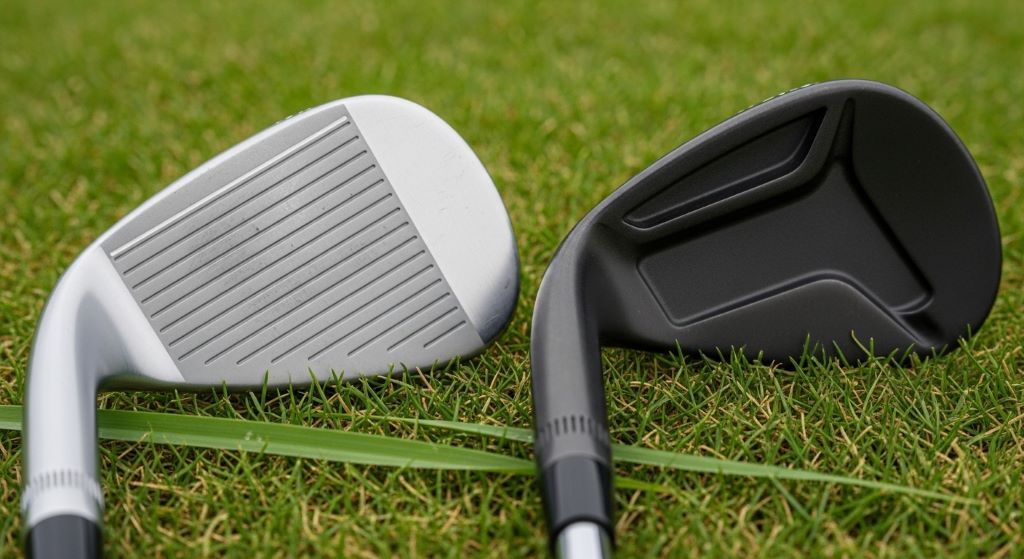
Cavity back wedges have a hollowed-out section on the back of the clubhead. This design moves weight to the perimeter of the club. The result is a larger sweet spot and more stability on off-center hits.
These are often called forgiving wedges. They are built for golfers who do not always make perfect contact. If your ball-striking is inconsistent, a cavity back wedge will help you produce more reliable results. The extra perimeter weighting keeps the face from twisting too much at impact.
Additionally, cavity back wedges tend to have a lower center of gravity. This makes it easier to get the ball airborne, especially from tight lies or soft turf. Many higher-handicap golfers find these clubs much easier to use on a day-to-day basis.
What Are Blade Wedges?
Blade wedges, also called muscle back wedges, have a solid back with minimal shaping. All the weight is concentrated behind the center of the face. This design gives the golfer more feedback and a greater level of blade control on every shot.
Skilled players prefer blades because they allow for more shot-shaping. You can open the face, play a flop shot, or flight the ball lower with ease. The club responds more directly to how you set it up and how you swing. Therefore, a blade rewards good technique and punishes poor strikes.
However, blades are less forgiving. Mishits produce a noticeable difference in distance and direction. This is not ideal for beginners or mid-handicap players who are still building their wedge game.
The Key Differences at a Glance
Before diving deeper, it helps to see the main differences side by side:
- Cavity back wedges offer a larger sweet spot and are more stable on mishits
- Blade wedges offer more feedback and workability for skilled players
- Cavity backs are better suited to high and mid-handicap golfers
- Blades are preferred by low-handicap players and professionals
- Cavity backs tend to have higher launch angles due to the lower center of gravity
How Your Skill Level Should Guide Your Choice
Your current skill level is the most important factor in this wedge comparison. Be honest with yourself here. Many golfers buy blades because they look impressive, but end up struggling as a result.
If you shoot above 90 regularly, a cavity back wedge will almost always serve you better. You will hit more greens, get up and down more often, and feel more confident over short shots. The added forgiveness means one poor swing does not ruin a hole.
If you shoot in the 70s or low 80s, you might be ready for a blade. At that level, your contact is consistent enough to benefit from the feedback. You will also start to notice when you need more shot variety, which is where a blade truly excels.
Mid-handicap golfers, those shooting in the 80s, often benefit from a mixed approach. Many golfers in this range use a cavity back lob wedge for full swings and high-spin shots, while using a blade-style gap wedge for tighter, more controlled bump-and-run shots.
When Forgiveness Matters Most
Not every golfer plays on perfect fairways. If your home course has tight lies, firm turf, or deep rough, the club you choose matters even more. Forgiving wedges perform well across a wider range of conditions.
For example, a firm bunker shot from a compacted sand trap is much easier with a cavity back. The extra weight around the perimeter keeps the club moving through impact even when the strike is not perfect. Additionally, wet turf can make clean contact harder. A forgiving wedge helps absorb some of that inconsistency.
Furthermore, fatigue is a real factor. By the 16th hole, your mechanics may not be as sharp as they were on the first tee. A cavity back wedge is more likely to produce an acceptable result even when your swing breaks down slightly.
When Blade Control Makes the Difference
At the highest levels of golf, shot variety is everything. A skilled player needs to be able to flight the ball low under wind, spin it back from behind the flag, or cut across the ball to stop it quickly. This level of blade control is simply not possible with a cavity back design.
Blades also respond better to wrist action through impact. If you like to manipulate the face angle during your swing, a blade will follow your intentions more precisely. Cavity back wedges, by contrast, resist this kind of manipulation due to their broader sole and perimeter weighting.
Professional golfers almost universally use blade wedges for this reason. They have the skill to make consistent contact, and they need the feedback and versatility that only a blade provides.
Considering the Sole Design
The sole grind is another factor that often gets overlooked. Sole grind refers to how the bottom of the club is shaped. This affects how the club interacts with the turf.
Cavity back wedges tend to have wider, more forgiving soles. These work well on a variety of surfaces and do not require precise technique to use effectively. However, wider soles can make it harder to open the face on tight lies.
Blade wedges often come with tighter, more adjustable soles. Many manufacturers offer multiple grind options for blade-style wedges. This allows skilled players to customize the club for their swing style and the courses they play most often.
Matching Your Wedge Set
Most golfers carry between two and four wedges. You do not have to stick to one style throughout your entire wedge set. In fact, mixing cavity back and blade wedges is a smart strategy for many players.
Consider carrying a cavity back pitching wedge and gap wedge for full approach shots, where forgiveness has the biggest impact on your score. Then use a blade-style sand wedge and lob wedge for short-game creativity around the green.
This approach lets you benefit from both design philosophies. You get consistency on longer wedge shots and artistry when you need it inside 50 yards.
Testing Before You Buy
Always try a wedge before committing to it. Many golf shops and fitting studios offer launch monitor sessions where you can test different models. Pay attention to how the club feels on mishits, not just clean strikes.
Notice the sound and vibration on off-center contact. A cavity back will feel relatively stable, while a blade will give you immediate feedback. Both are useful, but you should know what to expect before your round depends on it.
Additionally, test wedges on the grass if possible, not just off a mat. Turf interaction is a major part of wedge performance and can only be properly assessed outdoors.
Conclusion
Choosing between a cavity back and a blade wedge comes down to three main factors: your skill level, the type of shots you need most, and the conditions you play in most often.
Cavity back wedges offer forgiveness and consistency. They suit mid-to-high handicap golfers who want reliable results on every type of shot. Forgiving wedges are especially useful in difficult conditions or when your technique is still developing.
Blade wedges offer precision and feel. They suit low-handicap players who need blade control to shape shots and work the ball in every direction. The feedback they provide is invaluable for players who can already make solid, consistent contact.
Many golfers find that a combination of both styles is the smartest choice. Ultimately, the best wedge is the one that helps you get the ball in the hole in the fewest strokes. Use this wedge comparison to make a more informed decision, get fitted if you can, and spend time practicing with whatever you choose.
Frequently Asked Questions
Are cavity back wedges better for beginners?
Yes, in most cases. Cavity back wedges have a larger sweet spot and are more forgiving on off-center hits. This makes them a better fit for beginners and higher-handicap golfers who are still developing consistent ball-striking.
Can a high-handicap golfer use a blade wedge?
Technically yes, but it is not recommended. Blade wedges punish poor contact and require a more refined swing. High-handicap golfers will likely score better with cavity back or forgiving wedges until their short game improves.
How many wedges should I carry in my bag?
Most golfers carry three or four wedges. A common setup includes a pitching wedge, gap wedge, sand wedge, and lob wedge. The number you carry depends on your course and how you prefer to manage distances.
Do professional golfers ever use cavity back wedges?
Most professionals use blade wedges for the control and feedback they provide. However, some tour players do use cavity back designs in specific wedges, particularly if they prefer more forgiveness on full-swing shots.
What is the best way to test a wedge before buying?
The best approach is to visit a professional fitting center where you can hit wedges on a launch monitor and on real grass. Focus on how the club feels on off-center hits, how it interacts with the turf, and how consistent your distance control is across multiple swings.
Related Topics:
Top Ladder Drills for Soccer and Fitness: Teenitor Agility Ladder Review
Bodyboarding vs Stand-Up Surfing: Pros, Cons, & Vibes



Leave a Reply