

Lifting a car with a jack might seem straightforward, but it’s one of the most dangerous tasks many vehicle owners perform. Every year, accidents occur because people skip crucial safety steps or use equipment incorrectly. Understanding proper techniques can mean the difference between a simple tire change and a life-threatening situation.
Whether you’re changing a flat tire on the roadside or performing maintenance in your garage, knowing how to use a jack correctly is essential. This guide will walk you through everything you need to know about lifting your vehicle safely and avoiding common mistakes that lead to accidents.
Understanding Different Types of Jacks
Before attempting to lift your vehicle, you need to understand the equipment available. Different jacks serve different purposes, and using the wrong type can create serious hazards.
Scissor jacks typically come with your vehicle as emergency equipment. They’re compact, lightweight, and designed for roadside tire changes. However, they’re not suitable for working under your car or for extended periods. These jacks have limited height and lifting capacity.
Hydraulic floor jacks offer more stability and lifting power. They roll on wheels and use hydraulic pressure to raise vehicles higher than scissor jacks. These are better suited for garage work but require a flat, solid surface to operate safely.
Bottle jacks are compact hydraulic jacks that sit upright. They’re portable and powerful but have a small base, making them less stable than floor jacks. They work well for lifting heavy vehicles but require extra caution during use.
Each jack type has specific weight ratings and lifting points. Never exceed these limits or use a jack for purposes it wasn’t designed for. Doing so dramatically increases your risk of equipment failure.
Preparing Your Work Area
Creating a safe environment before you start is just as important as using the jack correctly. Your preparation determines whether the job proceeds smoothly or ends in disaster.
Find a level, solid surface for your work. Concrete or asphalt works best. Avoid soft ground, gravel, or sloped surfaces where the jack might sink or shift. Even a slight incline can cause instability once the vehicle is elevated.
Engage the parking brake firmly before beginning. This simple step prevents the car from rolling while elevated. Additionally, place the transmission in park for automatic vehicles or first gear for manual transmissions.
Clear the area around your vehicle of any obstacles. You need room to position the jack properly and move around safely. Remove tools, parts, or debris that might cause you to trip while working.
Check weather conditions if working outdoors. Wind can destabilize a lifted vehicle, and rain makes surfaces slippery. If conditions aren’t ideal, postpone the work or move to a protected area.
Turn off the engine and remove the keys from the ignition. This prevents anyone from accidentally starting the vehicle while it’s elevated. It also eliminates the risk of the car lurching forward if someone bumps the starter.
Locating Proper Lifting Points
Your vehicle has specific points designed to bear the load when lifted. Using incorrect locations can damage your car or cause the jack to slip, creating dangerous situations.
Consult your owner’s manual to find designated jacking points. Manufacturers engineer these locations to handle the stress of lifting. They’re typically reinforced areas of the frame or subframe.
Look for notches, grooves, or marked areas along the vehicle’s underside. These visual indicators show you exactly where to place the jack. Many modern vehicles have plastic covers with cutouts revealing the correct spots.
Avoid placing jacks on plastic components, body panels, or suspension parts. These areas can’t support the vehicle’s weight and will crack or bend. The resulting damage can be expensive and creates immediate safety risks.
For some maintenance tasks, you might need to use multiple jacks or jack stands. In these cases, ensure all lifting points work together to distribute weight evenly. Never lift only one side without proper support on the other.
Clean the lifting point before placing your jack. Mud, ice, or debris can prevent solid contact between the jack and the vehicle. A clean surface ensures maximum stability and grip.
Essential Jack Safety Tips Before Lifting
Following proper procedures before raising your vehicle prevents most accidents. These critical steps form the foundation of safe jacking practices.
Inspect your jack before each use. Look for hydraulic fluid leaks, bent components, or damaged parts. A faulty jack can fail without warning, so never use equipment that shows signs of wear or damage.
Place wheel chocks behind and in front of the tires that will remain on the ground. These blocks prevent the vehicle from rolling in either direction. You can buy commercial chocks or use wooden blocks in an emergency.
Loosen lug nuts slightly before lifting the vehicle. Trying to break them loose while the car is elevated can cause it to fall off the jack. Turn each nut about one quarter turn while the tire is still on the ground.
Keep people and pets away from the work area. Bystanders can accidentally bump the vehicle or distract you during critical moments. Establish a safe perimeter around your workspace.
Have a plan for emergencies. Know where your phone is located and how you’ll call for help if something goes wrong. Keep a first aid kit nearby and inform someone about what you’re doing.
Proper Jacking Technique
How you operate the jack determines whether the lift succeeds safely or fails catastrophically. Following correct procedures reduces risks significantly.
Position the jack directly beneath the designated lifting point. The jack should sit perpendicular to the ground with no angles or tilts. Any deviation from vertical creates instability.
Raise the jack slowly and steadily. Watch carefully as the vehicle begins to lift. Stop immediately if you hear unusual sounds, see the jack shifting, or notice the car tilting unexpectedly.
Lift only as high as necessary for your task. The higher you raise the vehicle, the less stable it becomes. Extra height increases the risk of the car falling if something shifts.
Never place any body parts under the vehicle while it’s supported only by a jack. Jacks are lifting devices, not support devices. They can fail or shift without warning, causing the vehicle to drop suddenly.
Check stability once the vehicle reaches the desired height. Gently push on the car from different angles to ensure it’s secure. If anything feels unstable, lower the vehicle and reassess your setup.
Using Jack Stands for Additional Support
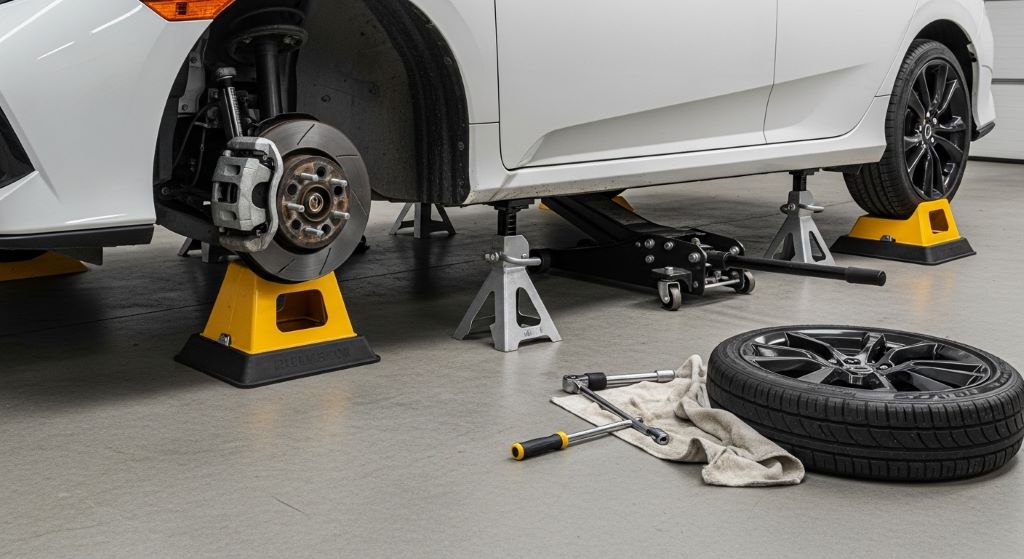
Jack stands provide the redundant safety measure that prevents injuries during automotive work. They’re non-negotiable if you plan to go under the vehicle or work for extended periods.
Position jack stands near the jack but not directly underneath it. Once you’ve raised the vehicle to the desired height, slide the stands into place under designated support points. These points are often different from jacking points.
Adjust stand height so they’ll contact the vehicle when you slowly lower it onto them. The stands should bear the vehicle’s weight, not the jack. Lower the car gradually until it rests solidly on the stands.
Keep the jack in position with some pressure maintained. This provides backup support if a stand fails. However, the stands should carry the primary load, with the jack serving as secondary protection.
Use appropriate stand capacity for your vehicle. Stands are rated by weight, and you need sufficient capacity for the portion of the vehicle they’re supporting. Additionally, always use stands in pairs for balanced support.
Shake the vehicle gently after positioning stands to verify stability. The car should feel solid with no movement or shifting. Any instability means you need to adjust your setup before proceeding.
Critical Lifting Precautions During Work
Once your vehicle is elevated, maintaining awareness and following safety protocols protects you from harm throughout the job.
Never work alone under a vehicle. Having someone nearby means help is available immediately if something goes wrong. Your assistant can call emergency services or help free you in case of an accident.
Keep your workspace organized while working. Scattered tools create trip hazards that can cause you to bump the vehicle or fall against the jack. Maintain clear pathways around the elevated car.
Move deliberately and carefully around the raised vehicle. Sudden movements or impacts can destabilize even properly supported cars. Think through each action before you perform it.
Monitor the jack and stands throughout your work. Periodically check that nothing has shifted or settled. Hydraulic jacks can slowly lose pressure over time, lowering the vehicle gradually.
Use proper tools for the job you’re performing. Fighting with incorrect tools can cause you to apply excessive force or lose your balance. This creates situations where you might destabilize the vehicle accidentally.
Lowering Your Vehicle Safely
Bringing the vehicle back down requires as much care as lifting it. Rushing this step or doing it incorrectly can cause accidents and damage.
Remove all tools and parts from under and around the vehicle before lowering. Forgotten items can get crushed, create tripping hazards, or interfere with the lowering process.
If using jack stands, raise the vehicle slightly with the jack to take weight off the stands. This allows you to remove them without forcing or prying. Never try to yank stands from under a loaded vehicle.
Lower the vehicle slowly and steadily. Control the descent rather than allowing the car to drop quickly. Watch for any irregular movement or signs that something isn’t right.
Guide the vehicle down onto the ground evenly. It should settle naturally without tilting or shifting to one side. Uneven settling suggests the jack wasn’t positioned correctly or the surface is uneven.
Once the vehicle is fully on the ground, remove the jack and verify all equipment is clear. Give the car a quick inspection to ensure everything is properly reassembled before driving.
Common Mistakes to Avoid
Understanding what not to do is just as valuable as knowing correct procedures. These common errors cause most jacking accidents.
Never use a jack on an unstable surface. Concrete blocks, wood, or other makeshift bases under the jack create instability. Use the jack only on solid, level ground as designed.
Don’t rush the process. Taking shortcuts or working too quickly leads to missed steps and dangerous situations. Allocate sufficient time to do the job correctly.
Avoid using damaged or inadequate equipment. Borrowing the wrong type of jack or using worn-out tools dramatically increases risk. Invest in proper equipment or wait until you have access to it.
Never exceed the jack’s weight rating. Even if the jack lifts the vehicle initially, overloading causes stress that can lead to sudden failure. Know your vehicle’s weight and use appropriately rated equipment.
Don’t ignore warning signs. If something feels wrong, looks unstable, or makes unusual sounds, stop immediately. Lower the vehicle and reassess rather than continuing with a potentially dangerous setup.
Conclusion
Safely lifting a car with jack tools requires knowledge, preparation, and respect for the inherent dangers. By understanding different jack types, preparing your work area properly, and locating correct lifting points, you create a foundation for safe operation. Following jack safety tips and observing proper lifting precautions throughout the process protects you from serious injury.
Remember that jacks are for lifting, not supporting. Always use jack stands when working under a vehicle, and never take shortcuts with safety procedures. Inspect your equipment before each use, work on level surfaces, and maintain awareness throughout the job.
The time invested in doing things correctly is minimal compared to the consequences of accidents. Whether you’re changing a tire or performing maintenance, these guidelines ensure you complete the task without putting yourself at risk. Your safety depends on treating every lift with the seriousness it deserves.
Frequently Asked Questions
How long can I safely keep a car lifted on a jack?
You should never keep a car supported only by a jack for any length of time. Jacks are designed for lifting, not extended support. If you need the vehicle elevated for more than a few minutes, always transfer the weight to jack stands. Hydraulic jacks can slowly lose pressure, and mechanical jacks can fail without warning. For safety, use jack stands immediately after lifting and keep the jack in place as backup support.
Can I use a jack on gravel or dirt surfaces?
Using a jack on gravel or dirt is extremely dangerous and should be avoided. These surfaces are unstable and allow the jack to sink or shift as weight is applied. Always move your vehicle to a solid, level surface like concrete or asphalt before attempting to lift it. If you absolutely must work on soft ground in an emergency, place a large, thick piece of plywood under the jack to distribute weight. However, this is a last resort and still carries significant risk.
What weight rating do I need for my jack?
Your jack should have a weight rating that exceeds your vehicle’s gross weight by at least 50 percent for safety margin. Check your vehicle’s door jamb sticker or owner’s manual for the exact weight. Remember that you’re typically lifting only half the vehicle, but always choose equipment rated for the full weight to ensure adequate capacity. Additionally, consider that adding cargo or passengers increases the total weight you’re lifting.
Do I need jack stands for a simple tire change?
For a basic roadside tire change, you typically don’t need jack stands since you’re not going under the vehicle and the work takes only minutes. However, you should still use wheel chocks and work on level ground. If you’re doing tire work in your garage or anywhere you might spend more time, using jack stands provides an important safety backup. The extra few minutes to position stands is worthwhile insurance against accidents.
How do I know if my jack is still safe to use?
Inspect your jack before each use for visible damage, cracks, bent components, or rust. For hydraulic jacks, check for fluid leaks and ensure the release valve works smoothly. Test the jack’s operation by lifting something safely before working on your vehicle. If the jack struggles, makes unusual sounds, or doesn’t hold weight steadily, don’t use it. Replace jacks that show any signs of wear or damage rather than risking failure during use.
Related Topics:
Fleet Vehicle Maintenance Tips to Keep your Fleet Running Smoothly
How to Stop Car Window from Breaking During Accidents




Leave a Reply