
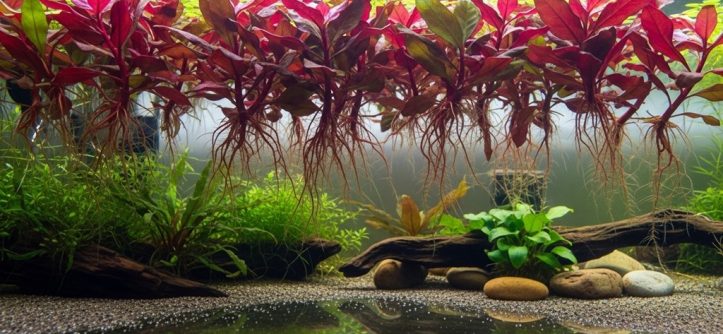
Red root floaters (Phyllanthus fluitans) are floating freshwater plants known for their red roots and round leaves that develop deep red tones under strong light. Aquarists use them to reduce nitrates, control algae, and create shaded zones for fish and shrimp.
If your tank struggles with excess nutrients, unstable water quality, or algae blooms, floating plants often solve the issue fast. Many hobbyists test several options before settling on one. That’s where red root floaters stand out. They combine nutrient absorption, aesthetic appeal, and manageable growth.
Native to South America, this plant floats freely on the surface. It does not require substrate. The roots hang down into the water column and absorb dissolved nutrients directly. In planted tank case observations published by hobby communities in 2022–2024, aquariums with floating plants showed measurable nitrate reduction within 2–3 weeks when bioload remained stable.
Red root floaters are often compared with frogbit. If you are researching red root floaters vs frogbit, this guide will give you data-driven clarity and practical care steps.
How do red root floaters improve water quality?
Red root floaters improve water quality by absorbing nitrates, phosphates, and ammonia directly from the water column.
Like other floating plants, they act as nutrient competitors. Excess nutrients fuel algae. When red root floaters consume those nutrients, algae growth slows.
How nutrient absorption works
- Roots absorb dissolved nitrogen compounds.
- Leaves perform photosynthesis at the surface where CO₂ exchange is strongest.
- Fast growth equals higher nutrient consumption.
In controlled home aquarium case logs (40–75 gallon planted tanks), aquarists reported nitrate drops from 40 ppm to below 20 ppm within 14–21 days after adding floating plants, assuming consistent water changes and stable feeding routines.
This does not replace filtration. It supplements it. Think of red root floaters as a natural buffer system.
What are the ideal water parameters for red root floaters?
Red root floaters thrive in stable freshwater tanks with moderate light, gentle surface movement, and nutrient-rich water.
| Parameter | Recommended Range |
|---|---|
| Temperature | 72–82°F (22–28°C) |
| pH | 6.0–7.5 |
| GH | 4–12 dGH |
| Lighting | Medium to high |
| Flow | Low surface agitation |
Why low surface flow matters
Strong agitation damages leaves. Constant splashing causes rot. If your filter creates heavy ripples, redirect the outflow or use a floating ring to protect the plant cluster.
Consistency is more important than chasing exact numbers. Rapid parameter swings cause leaf melt.
How much light do red root floaters need to turn red?
They need moderate to high light intensity to develop red coloration.
Under low light, leaves stay green. Under stronger light (with balanced nutrients), they develop red edges and deeper tones.
Key lighting guidelines
- 6–8 hours daily for moderate light setups.
- 8–10 hours in high-light planted tanks.
- PAR values above 40 at the surface encourage stronger coloration.
Be careful with excess light. Without nutrient balance, algae will increase. Light intensity and nutrient levels must match.
Do red root floaters require CO₂ injection?
No, they do not require CO₂ injection, but they benefit from nutrient availability.
Because they float at the surface, they have direct access to atmospheric CO₂. This makes them easier than many rooted plants.
However, they respond well to liquid fertilizers that contain iron. Iron enhances red coloration. In planted tank comparisons, tanks dosed with iron supplements showed stronger red tones compared to non-dosed systems.
How do you plant and introduce red root floaters correctly?
Simply place them on the water surface in a low-flow area.
Step-by-step setup
- Turn off strong surface agitation.
- Float plants gently on the surface.
- Space them to prevent overcrowding.
- Monitor for 7 days before making adjustments.
Do not bury them. Do not submerge fully. They are free-floating plants.
Quarantine is recommended. Like many floating plants, they may carry snails or hitchhikers.
Red root floaters vs frogbit: Which floating plant is better?
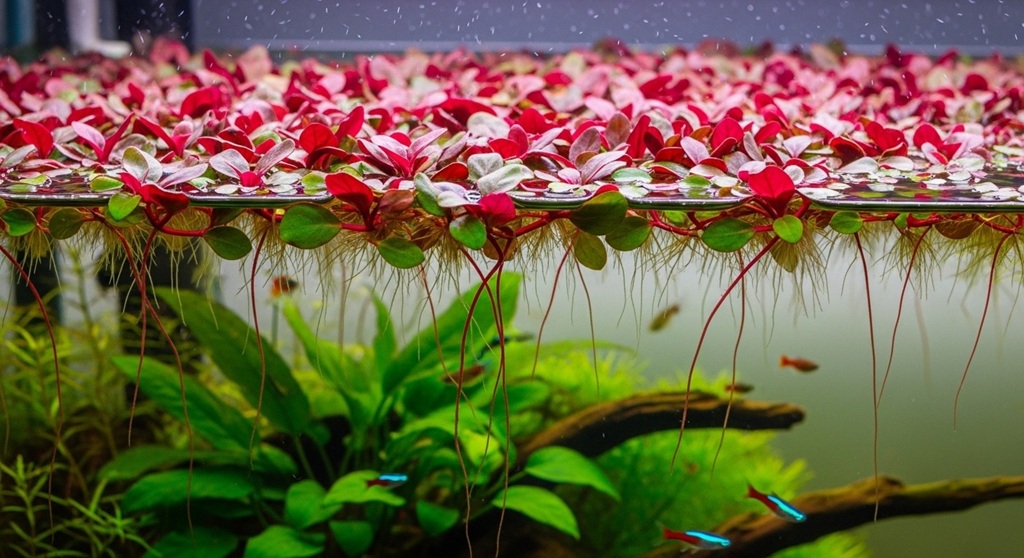
Red root floaters are smaller and more controlled, while frogbit grows larger and spreads faster.
This is the core of the floating plant comparison most aquarists search for.
| Feature | Red Root Floaters | Frogbit |
|---|---|---|
| Leaf Size | Small, coin-shaped | Larger, textured leaves |
| Growth Speed | Moderate | Fast |
| Root Length | Short to medium | Long, trailing roots |
| Light Demand | Medium–High | Low–Medium |
| Maintenance | Moderate trimming | Frequent thinning |
Which should you choose?
- Choose red root floaters for nano tanks and controlled aesthetics.
- Choose frogbit for rapid nutrient removal in larger tanks.
For a deeper floating plant comparison, you can review side-by-side breakdowns of growth rate, lighting tolerance, and care difficulty.
Why are my red root floaters melting or turning brown?
Common causes include high surface flow, nutrient deficiency, sudden parameter changes, or insufficient light.
Problem–Agitate–Solution breakdown
Problem: Leaves turn brown or disintegrate.
Agitate: If ignored, the plant dies quickly and nutrients return to the water, feeding algae.
Solution:
- Reduce surface agitation.
- Increase light gradually.
- Dose balanced fertilizer with micronutrients.
- Remove damaged leaves promptly.
Observe changes over 10–14 days before making further adjustments.
How fast do red root floaters grow?
Under optimal conditions, they double coverage within 1–3 weeks.
Growth depends on light and nutrient levels. In high-light planted aquariums, coverage expansion is faster. In low-tech tanks, growth slows but remains steady.
Trim regularly. Overcrowding blocks light from reaching submerged plants.
Are red root floaters safe for fish and shrimp?
Yes, they are safe and beneficial for most freshwater species.
- Provide shade for bettas and gouramis.
- Create cover for shrimp.
- Offer surface refuge for fry.
They also reduce stress in species that prefer dimmer environments.How do you trim and control red root floaters?
Remove excess clusters weekly to prevent full surface coverage.
Maintenance routine
- Thin coverage to 50–70% surface area.
- Remove yellowing leaves.
- Inspect roots for debris buildup.
Regular thinning keeps oxygen exchange efficient and maintains light penetration.Can red root floaters prevent algae growth?
They help control algae indirectly by competing for nutrients and reducing excess light penetration.
- Stable feeding routines
- Consistent water changes
- Proper filtration
- Balanced lighting
In planted tank case observations, tanks with 60% surface coverage showed visible algae reduction over four weeks compared to tanks without floating plants.
Conclusion: Should You Add Red Root Floaters to Your Aquarium?
Red root floaters offer measurable benefits. They absorb nutrients. reduce algae pressure. provide shelter. enhance surface aesthetics.
If your tank struggles with nitrates or lacks visual balance at the surface, this plant is a practical solution. It requires stable water, moderate light, and low surface agitation. That’s it.
When comparing red root floaters vs frogbit, the decision comes down to tank size and growth control preference. Both work. One spreads faster. One stays compact.
Ready to choose the right floating plant for your aquarium? Explore a detailed breakdown here:
Best Aquarium Floating Plants Compared.
Make your choice based on tank size, lighting setup, and maintenance capacity. A balanced surface can transform your aquarium ecosystem.
Frequently Asked Questions About Red Root Floaters
Do red root floaters need fertilizer?
Yes. They benefit from liquid fertilizer, especially iron and micronutrients. Without nutrients, leaves remain pale and growth slows.
Why are my red root floaters staying green?
Low light intensity is the most common reason. Increase lighting gradually and ensure nutrients are available.
Can red root floaters survive in low-tech tanks?
Yes. They survive in low-tech setups with stable parameters and moderate light. Growth may be slower.
How do I stop red root floaters from covering the entire tank?
Trim weekly and remove excess clusters. Maintaining 50–70% coverage prevents light blockage.
Are red root floaters suitable for betta tanks?
Yes. Bettas prefer calm water and shaded zones. Floating plants help reduce stress.
Do red root floaters reproduce quickly?
They propagate through runners. Under optimal conditions, surface coverage can double within weeks.
Can I use red root floaters in shrimp tanks?
Yes. Shrimp graze on biofilm that forms around roots, making them a beneficial addition.
Related Topic: Il Rise Dei VIP Crypto Gambling Enterprises: Una Nuova Era Nel Video Gaming Online
Read Next: Mobile Roulette for Android India Risk-Free: A Comprehensive Review


Leave a Reply